


Choosing the Right Books and Study Materials for Competitive Exam Preparation
Confused about which books to choose for competitive exam preparation? Learn how to select the right study materials, avoid resource overload, and build an effective preparation strategy for success.
Choosing the Right Books and Study Materials for Competitive Exam Preparation
Are you collecting study materials or actually preparing for the exam?
One of the first things aspirants do after deciding to prepare for a competitive exam is search for books, PDFs, notes, YouTube channels, and study materials. Within a few days, many end up with a huge collection of resources but very little clarity on what to study.
The problem is not the lack of resources. The problem is choosing and using them correctly.
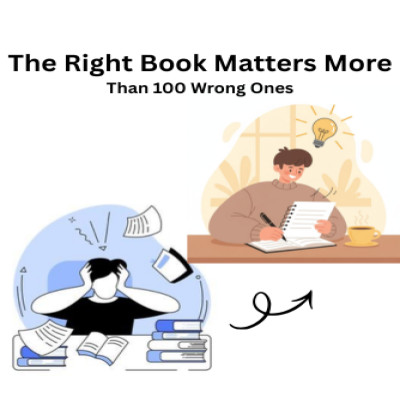
Many aspirants believe that more books mean better preparation. In reality, too many resources can create confusion, waste valuable time, and reduce consistency in preparation.
This is why selecting the right books and study materials is one of the most important steps in competitive exam preparation.
1. Start with the Syllabus, Not the Books
Many aspirants make the mistake of buying books before properly understanding the exam syllabus.
The syllabus should always be the starting point of your preparation.
Before purchasing any book or collecting any material, ask yourself:
- What subjects are included in the syllabus?
- What topics are covered under each subject?
- What is the exam pattern?
- What type of questions are usually asked?
Imagine you want to travel abroad. Would you choose a car when the journey requires an airplane? No matter how expensive or comfortable the car is, it cannot take you to the right destination. In the same way, even the best books cannot help an aspirant succeed if they do not match the exam syllabus.
Before choosing any study material, make sure it aligns with the official syllabus and exam requirements.
2. Gather Resources Early, But Gather Them Wisely
Once you understand the syllabus, start collecting the required books and study materials as early as possible.
However, gathering resources does not mean collecting everything available online.
Many aspirants spend hours searching for:
- Toppers' booklists
- Telegram PDFs
- Study notes from multiple sources
- YouTube recommendations
- Coaching materials
As a result, they end up with too many resources and too little focus.
Instead, choose a limited number of reliable resources that cover the syllabus effectively.
Remember:
A small collection of useful resources is far more valuable than a large collection of unused resources.
3. Verify Whether the Material Matches the Syllabus
Not every book is suitable for every examination.
Before finalizing any resource, compare its contents with the official syllabus.
Ask yourself:
- Does this book cover the required topics?
- Is the content relevant to my target exam?
- Does it explain concepts clearly?
- Does it include sufficient examples and practice questions?
Many students waste time studying topics that are not even part of their examination.
Your study materials should help you move toward the syllabus—not away from it.
4. Avoid Resource Overload
One of the biggest mistakes aspirants make is continuously searching for new resources.
Every day, they discover:
- A new YouTube educator
- A new PDF
- A new book recommendation
- A new strategy video
Instead of completing what they already have, they keep adding more.
This creates confusion and reduces productivity.
The truth is simple:
Preparation improves through completion and revision, not through collection.
Many successful candidates clear examinations using a limited set of books that they revise multiple times.
5. How to Use Books and Study Materials Effectively
Choosing the right resources is only the first step. Learning how to use them effectively is equally important.
Highlight Important Information
While studying, highlight important facts, concepts, formulas, dates, and definitions.
This makes revision faster and more effective.
Prepare Short Notes
Create concise notes containing:
- Key concepts
- Important facts
- Frequently asked points
- Quick revision material
Short notes become extremely useful during the final stages of preparation.
Understand Before Memorizing
Do not focus only on memorization.
Understanding concepts improves retention, application, and problem-solving ability.
Memorize Important Quotes Correctly
Many competitive examinations require aspirants to remember important quotations, constitutional statements, historical remarks, and definitions.
When memorizing such content, avoid changing the original wording.
A famous quote should be remembered exactly as it was stated.
6. Manage Time for Every Subject
Aspirants often spend more time on subjects they enjoy and less time on subjects they find difficult.
This creates imbalances in preparation.
Create a study schedule that allocates time for:
- Learning new topics
- Revision
- Practice questions
- Mock tests
- Weak subjects
Balanced preparation leads to better overall performance.
Remember:
Every subject contributes to your final result.
7. Revision Makes Study Materials Valuable
Reading a book once is not enough.
Knowledge becomes stronger through repeated revision.
Benefits of regular revision include:
- Better memory retention
- Improved conceptual clarity
- Faster recall during examinations
- Increased confidence
A well-revised book is often more valuable than several books that have been read only once.
The goal is not to finish the maximum number of books.
The goal is to master the right books.
How EA Dream Supporters Helps Aspirants
At EA Dream Supporters, we understand that many aspirants struggle to identify the right books and study materials for their examinations.
Through personalized preparation management, we help students:
- Understand the syllabus clearly
- Select suitable resources
- Create realistic study plans
- Track preparation progress
- Avoid resource overload and confusion
Our objective is not just to help aspirants study more, but to help them study smarter and remain consistent throughout their preparation journey.
Frequently Asked Questions (FAQ)
1. How many books should I use for one subject?
Focus on one primary book and a limited number of supporting resources rather than multiple books covering the same topics.
2. Is it necessary to buy every book recommended by toppers?
No. Toppers' recommendations can provide guidance, but your preparation should be based on your syllabus and learning requirements.
3. Are online PDFs enough for preparation?
PDFs can be useful if they are relevant and aligned with the syllabus. Quality matters more than quantity.
4. Should I make notes from every book?
No. Prepare notes only for important concepts, facts, and revision purposes.
5. What is the biggest mistake aspirants make while selecting study materials?
The biggest mistake is collecting too many resources and failing to complete or revise them properly.
Conclusion
Choosing the right books and study materials is one of the most important decisions in competitive exam preparation.
Start with the syllabus, select resources wisely, avoid collecting unnecessary materials, and focus on understanding, revision, and consistency.
Do not measure your preparation by the number of books on your table.
Measure it by how well you understand, revise, and apply what you study.
Remember, success does not come from owning the most books. It comes from making the best use of the right books.